


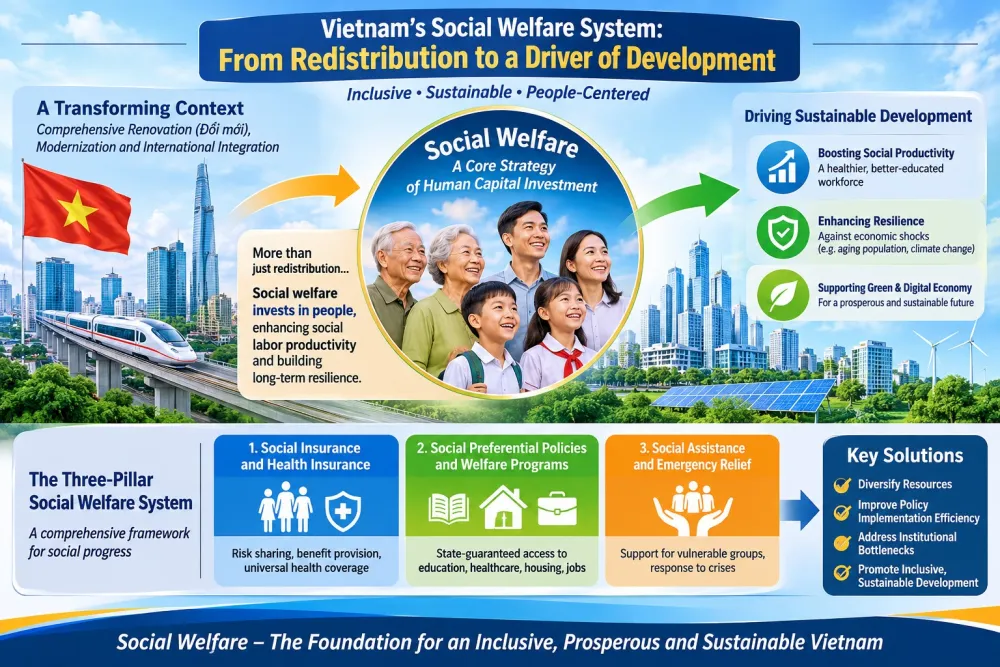
In the process of comprehensive renovation (Đổi mới), modernization, and international integration, Vietnam’s economic growth model is undergoing a profound shift toward inclusive and sustainable development. This paper examines the theoretical and practical evolution of Vietnam’s social welfare system, transitioning from a passive, compensatory redistribution tool to an active driver of development. Utilizing dialectical and historical materialism as the foundational methodology alongside policy framework analysis, the study demonstrates that social welfare is not merely the redistribution of national income to ensure minimum living standards and reduce the wealth gap, but fundamentally a core strategy of human capital investment. This investment directly enhances social labor productivity, strengthens resilience against macroeconomic shocks such as rapid population aging and climate change, and lays the groundwork for transitioning toward a green and digital economy. Based on identifying practical contradictions and institutional bottlenecks, the paper proposes a comprehensive set of solutions to diversify resources and improve the implementation efficiency of social welfare policies in the new era.
Keywords: Social Welfare; Income Redistribution; Human Capital; Development Driver; Sustainable Development; Vietnam.
INTRODUCTION
Economic development accompanied by social progress and fairness represents one of the core, enduring principles of the socialist-oriented market economy model in Vietnam. Over more than three decades of Đổi mới (Renovation), the social welfare system has successfully performed its role as a tool for redistributing national income beyond distribution according to labor, protecting vulnerable social groups, promoting poverty eradication, and narrowing the wealth gap in society.
However, entering a new development phase requiring a breakthrough to escape the middle-income trap, the Vietnamese economy faces complex structural challenges. Traditional growth drivers relying on resource exploitation and low-cost labor are reaching their efficiency limits. Meanwhile, global trends such as the Fourth Industrial Revolution, rapid demographic aging, severe climate change, and pressures to transition to a green economy present unprecedented questions for social development governance.
In this context, viewing social welfare merely as a passive relief measure or a static fiscal burden prevents the economy from generating sustainable momentum. Researching the reshaping of social welfare’s essence—shifting from a passive income redistribution tool to an endogenous development driver—becomes a strategic theoretical and practical imperative to resolve internal contradictions in social development.
RESEARCH METHODOLOGY
To decode the essence and shift of social welfare in Vietnam, this paper employs the methodology of dialectical materialism and historical materialism. This approach allows for examining the social welfare system within continuous motion and development, governed by the level of development of productive forces and relations of production across historical periods.
Alongside the general methodology, the study flexibly integrates specialized and interdisciplinary research methods. The method combining logic and history is applied to reconstruct the historical evolution of social welfare models in Vietnam from the state-subsidy period to the socialist-oriented market economy era. Methods of analysis and synthesis, induction and deduction are used to systematize theoretical schools regarding redistribution, human capital, and social governance. Simultaneously, the systemic and comparative approach helps evaluate the three-pillar structure of the social welfare system and highlights practical contradictions between policy objectives and resource guarantees under current socioeconomic conditions.
RESULTS AND DISCUSSION
Theoretical Issues on Social Welfare in Vietnam
Concept and Essence
In global social science literature, the concept of social welfare is approached through various rich dimensions. Gordon Marshall (1998) defines social welfare as a state or condition of decent and happy living, securing essential human needs such as food, clothing, housing, healthcare, education, and employment opportunities. From an institutional perspective, Beulah Compton (1980) views social welfare as an institutional system comprising policies and regulations implemented by the State or social organizations to provide a minimum level of essential social services to individuals, families, and communities. The Japanese Welfare Survey Report (1971) emphasizes indirect support to improve social relationships.
In Vietnam, the Vietnam Encyclopedia (2005) defines social welfare as the portion of national income used to satisfy the material and spiritual needs of society’s members, distributed primarily outside income according to labor through redistribution. In summary, the essence of social welfare is redistributive activity conducted by the State through the state budget to resolve social issues, adjust income, narrow the gap between rich and poor, and ensure a better life for the people.
It is necessary to clarify the academic distinction between social security and social welfare: while social security focuses on preventing income loss risks and guaranteeing minimum living standards based on labor contributions, social welfare has a broader and higher-level scope, aiming to help all members enjoy the fruits of development through redistribution beyond labor income. Inheriting Hồ Chí Minh’s thought, social welfare in Vietnam is closely linked to satisfying four essential needs: ensuring the people have food, clothing, housing, and education.
From the perspective of modern development economics, such as the theories of Joseph Stiglitz and Amartya Sen, social welfare is not merely a consumption expense or a fiscal burden. On the contrary, distributing welfare through healthcare, education, and social policies represents human capital investment. Enhancing the capacity, knowledge, and health of workers through social welfare directly increases social labor productivity, fosters innovation, and generates sustainable growth drivers.
The Three-Pillar Structure of Vietnam’s Social Welfare System
Vietnam’s social welfare system currently revolves around three core constituent pillars. The first pillar is the Social Insurance and Health Insurance system, operating on the principles of contribution-benefit, risk sharing, and collective pooling, aiming for universal health coverage and expanding health and pension welfare benefits to the entire workforce.
The second pillar comprises social preference schemes and welfare programs funded fully or partially by the state budget for general development goals without requiring contribution or material counterpart from beneficiaries, including education, health, housing, and employment welfare.
The third pillar is the social assistance and emergency relief system, playing the role of income redistribution in response to urgent situations, natural disasters, epidemics, and providing allowances to particularly vulnerable groups. Vietnam is a regional pioneer in adopting multidimensional poverty standards, transitioning from passive material aid to livelihood support and capacity building for self-reliant welfare.
Historical Evolution of Models
The social welfare system in Vietnam has undergone historical evolution linked to the country’s development stages. Prior to 1954, social welfare operated primarily under a traditional model based on family, lineage, and village community solidarity and support.
From 1954 in the North and 1975 nationwide until prior to 1986, the state-subsidy social welfare model was established within a centrally planned economy, where the State acted as the sole subject in subsidizing, distributing, and guaranteeing all welfare needs.
Since the Đổi mới line was initiated in 1986, Vietnam has gradually built a social state model suitable for a socialist-oriented market economy. This modern model operates through multi-party coordination among the State, enterprises, social organizations, and citizens themselves, where the State plays the leading role in institutional framework and resource orientation, while mobilizing maximum socialized resources to elevate the quality and coverage of social welfare.
Contradictions in Reshaping Social Welfare from a Redistribution Tool to a Driver of Sustainable Development
Contradiction Between the Requirement to Reshape Social Welfare into a Development Driver and Traditional Passive Redistribution Thinking
Current social governance practice exhibits a deep contradiction between traditional thinking that views social welfare as passive subsidy expenditure and modern requirements treating it as human capital investment. Passive subsidy thinking restricts the proactivity of the welfare system in boosting social labor productivity and creating sustainable economic growth drivers.
Contradiction Between the Need for Comprehensive Social Welfare Coverage and the Limitations of Public Financial Resources
Although the Party and State of Vietnam have promulgated many humane policies, reality shows that state budget resources for welfare remain limited and fragmented. The degree of socialization in mobilizing non-state resources is still modest, and voluntary welfare funds develop slowly. The imbalance between the increasingly high and diverse needs of the population and public financial capacity exerts great pressure on the sustainability of the social welfare system, particularly amid rapid demographic aging.
Contradiction Between the Need for Flexible, Diverse Implementation Methods and the Lack of Inclusivity Toward the Informal Sector
The implementation process reveals a lack of operational flexibility. Informal workers, self-employed workers, and migrant workers—who constitute a large proportion of the labor force—face significant barriers in accessing long-term social welfare policies. Implementation in some localities remains administrative, lacking synchronized inter-agency coordination and modern information-sharing mechanisms.
Contradiction Between the Goal of Social Fairness and the Reality of Disparities in Social Welfare Enjoyment
Disparities in social welfare enjoyment across population groups and geographic regions have not been fully bridged. Differences in the quality of education, healthcare, and welfare infrastructure between urban areas and remote, border, or ethnic minority regions remain pronounced. Income gaps and living conditions among social strata demand stronger income redistribution and resource regulation measures.
Major Solutions to Enhance the Efficiency of Social Welfare as a Driver of Sustainable Development
Raising Awareness and Responsibility of Stakeholders in Implementing Social Welfare Policies
This is a breakthrough priority solution deciding the entire process of formulating and implementing social welfare policies. It is essential to unify awareness across the political system and society regarding mindsets: viewing social welfare as development investment rather than pure consumption expenditure. Step up communication and education to raise the responsibility of party committees, government levels, enterprises, and citizens in actively participating in and contributing to the social welfare system.
Building and Perfecting a Multi-Tiered, Inclusive, and Enabling Policy and Legal System on Social Welfare
Fully institutionalize Party guidelines on social development alongside economic growth. Review, amend, and perfect the legal framework on social welfare, ensuring synchronization, consistency, and flexibility. Design diverse welfare packages, especially policies supporting production, vocational training, job creation, and voluntary insurance to extend coverage to informal workers and vulnerable groups.
Enhancing the Implementation Efficiency of Social Welfare Programs and Projects
Increase transparency, openness, and accountability in executing social welfare policies. Accelerate digital transformation, completing the national social welfare database integrated with the National Population Database for accurate beneficiary management, reducing administrative procedures, and avoiding policy overlaps. Innovate welfare governance toward modern, professional standards and improved public service quality.
Building Abundant Financial Resources and Ensuring Fairness in Welfare Resource Allocation
Diversify financial resources for social welfare by combining state budget funds with socialized resource mobilization. Implement public-private partnership (PPP) mechanisms in investing in healthcare, education, social housing, and elderly care infrastructure. Allocate and utilize the state budget for social welfare with focus and priority, directing resources to disadvantaged, remote, and ethnic minority regions to guarantee social fairness.
Streamlining the Organizational Apparatus and Capacity Building for Social Welfare Personnel
Build a lean, effective, and efficient state management apparatus for social welfare. Train and foster professional qualifications, management capacity, and public service ethics for cadres, civil servants, public employees, and social workers at all levels, particularly at the grassroots level. Strengthen inspection, supervision, and strict handling of violations in social welfare policy execution.
Promoting the Internal Strength of Citizens and Communities Combined with Mobilizing Socialized Resources
Awaken the spirit of self-reliance and self-improvement, overcoming reliance and passive expectation on state support among sections of the population. Promote the role of families, lineages, and communities in mutual care and support. Create favorable mechanisms for socio-political organizations, businesses, charitable entities, and the international community to contribute resources and deploy innovative, effective social welfare models.
CONCLUSION
Social welfare reflects the humane and superior essence of the socialist system in Vietnam. The study has demonstrated that in the new development phase, social welfare needs to be reshaped from a passive compensatory income redistribution tool into a strategic driver of sustainable development. Investing in social welfare is investing in human capital, creating the foundation to raise labor productivity, consolidate socio-political stability, ensure national defense and security, and enhance national resilience against development shocks.
To realize the role of social welfare as a development driver, it is necessary to synchronously execute a comprehensive solution system ranging from raising awareness, perfecting institutions, enhancing implementation efficiency, diversifying financial resources, streamlining the organizational apparatus, to promoting the internal strength of citizens and communities. The synchronized and flexible execution of these solutions will contribute actively to the goal of building a rich, strong, democratic, fair, and civilized Vietnam.
Dr. Trương Tất Thịnh – Academy of Military Technical
REFERENCES
- Compton, B. (1980), Introduction to Social Welfare and Social Work, Dorsey Press.
- Communist Party of Vietnam (2011), Documents of the 11th National Congress, National Political Publishing House, Hanoi.
- Communist Party of Vietnam (2016), Documents of the 12th National Congress, National Political Publishing House, Hanoi.
- Communist Party of Vietnam (2021), Documents of the 13th National Congress, National Political Publishing House, Hanoi.
- Hồ Chí Minh (2011), Letter to the Executive Committee of the Vietnam Workers’ Party of Nghe An Province (1956), Hồ Chí Minh Complete Works, vol. 15, National Political Publishing House, Hanoi.
- Vietnam Encyclopedia (2005), Definition of Social Welfare, Vol. 3, Encyclopedia Publishing House, Hanoi.
- Trương Tất Thịnh (2023), “Some issues about ensuring social welfare for ethnic minority in Vietnam now”, Southeast Asian Studies, no. 12 (285), pp. 75-80.
Bài viết cùng chuyên mục
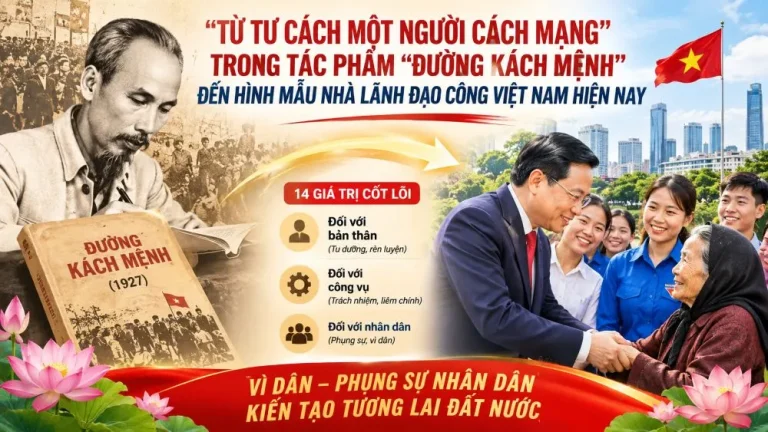 Từ tư cách một người cách mạng trong tác phẩm “Đường kách mệnh” đến hình mẫu nhà lãnh đạo công Việt Nam hiện nay
 Kỳ Cuối: Sách giáo khoa vì con người, vì đất nước – trách nhiệm với tương lai dân tộc
 Vai trò tiên phong trong hội nhập và phát triển của thành phố Hồ Chí Minh hiện nay
 “Cách mạng trắng”: Nhận diện mục tiêu và phương thức của một chiến lược chính trị
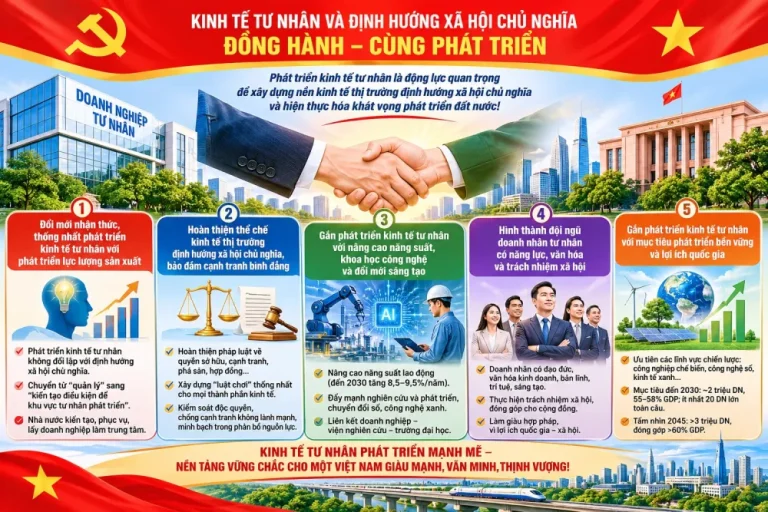 Mối quan hệ giữa phát triển Kinh tế Tư nhân và định hướng Xã Hội Chủ Nghĩa ở Việt Nam
 Kỳ VI: Từ phản biện đến sửa sai – cơ chế giám sát chất lượng sách giáo khoa